Premium Glass Water Bottles: A Complete Packaging Guide for Water Brands
Article release time:10 2026 Pageview:10
Premium Glass Water Bottles: A Complete Packaging Guide for Mineral Water and Sparkling Water Brands
In the competitive bottled water industry, packaging plays an important role in how consumers perceive a brand. While plastic bottles remain common in mass-market distribution, premium glass water bottles offer a distinctive presentation for mineral water, sparkling water, luxury hospitality, and specialty beverage brands.
For companies developing a new bottled water product or upgrading an existing packaging line, choosing the right glass bottle involves more than appearance. Bottle clarity, shape, capacity, closure compatibility, filling requirements, and transportation costs all influence the final packaging decision.
This guide explains how to select premium glass water bottles for commercial bottling and wholesale sourcing.
1. Why Premium Water Brands Choose Glass Bottles
Glass packaging is widely used for premium beverages because of its appearance, material properties, and suitability for customized brand presentation.
Premium Brand Positioning
A clear, well-designed glass bottle can help communicate quality and refinement. In hotels, restaurants, cafés, and premium retail environments, the bottle often becomes part of the customer experience.
A distinctive silhouette, elegant neck, and carefully selected closure can make a bottled water product more recognizable.
Product Protection
Glass is an inert packaging material and, when paired with an appropriate closure, can help protect the beverage from unwanted interactions with its container.
For mineral water and sparkling water, packaging compatibility should be verified according to the product formulation, filling process, and required shelf life.
Recyclability and Reuse
Glass can be recycled, and certain bottles can be designed for reusable packaging systems. However, environmental performance depends on factors such as transportation distance, bottle weight, collection infrastructure, and reuse rates.
Brands planning a returnable glass bottle program should confirm that the bottle design meets the necessary washing, handling, and durability requirements.
2. Popular Types of Premium Glass Water Bottles
Different bottled water brands require different bottle designs.
Clear Glass Mineral Water Bottles
Clear glass is a popular choice for premium still water. It allows consumers to see the product and creates a clean, minimalist appearance.
Typical design features include:
High-clarity glass
Smooth cylindrical or tapered bodies
Long or medium necks
Screw-cap closures
Customized labels or screen printing
These bottles are suitable for premium mineral water brands, hotels, restaurants, and private-label bottled water projects.
Sparkling Water Glass Bottles
Sparkling water bottles require additional attention to internal pressure and closure performance.
A bottle intended for carbonated water must be specifically engineered and tested for the applicable filling pressure, storage conditions, and distribution requirements.
A visually similar still-water bottle should not be assumed suitable for sparkling water.
Colored Glass Water Bottles
Blue, green, and other colored glass bottles can help brands create a distinctive visual identity.
Colored bottles may be used for premium mineral water, specialty beverages, and hospitality projects. The choice of color should reflect the brand's positioning and product requirements.
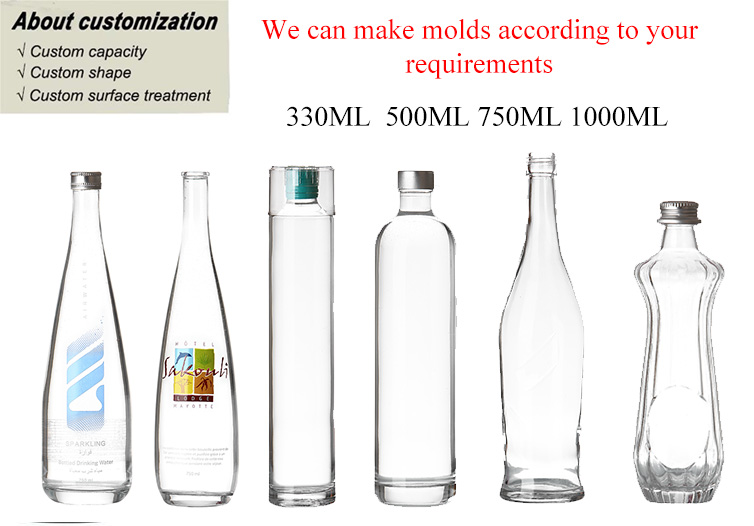
Custom-Shaped Glass Water Bottles
Brands seeking distinctive packaging may choose custom molds, embossed logos, or unique bottle silhouettes.
Custom designs can support brand recognition, but they also require evaluation of mold costs, production feasibility, filling-line compatibility, and packaging efficiency.
3. Choosing the Right Glass Water Bottle Size
Bottle capacity should reflect the intended sales channel and consumer experience.
| Bottle Capacity | Typical Application |
|---|---|
| 250ml–330ml | Hotels, restaurants, premium hospitality |
| 500ml | Retail bottled water, cafés, hospitality |
| 700ml–750ml | Restaurants, premium dining, table service |
| 1000ml | Family dining, restaurants, shared table service |
For many wholesale projects, 330ml, 500ml, and 750ml are practical starting points.
Before selecting a capacity, buyers should also consider bottle dimensions, carton configuration, pallet efficiency, and compatibility with existing filling equipment.
4. Why Glass Clarity Matters
The transparency of a glass bottle can influence the appearance of a premium bottled water product.
High-clarity glass, including Super Flint glass where appropriate, can provide a clean presentation and help highlight the purity and visual appeal of the beverage.
However, glass quality should not be evaluated by clarity alone.
Important purchasing specifications include:
Glass composition and appearance
Bottle weight and dimensional tolerance
Wall-thickness consistency
Closure and neck-finish accuracy
Resistance to handling and transportation
Quality-control requirements
For premium packaging projects, buyers should request physical samples and review production specifications before confirming a bulk order.
5. Bottle Closures and Filling-Line Compatibility
A suitable closure is essential for both product presentation and packaging performance.
Common options for glass water bottles include aluminum screw caps and other compatible tamper-evident closure systems.
Before placing an order, buyers should confirm:
Bottle neck-finish dimensions
Closure material and liner specifications
Filling and capping equipment compatibility
Required sealing performance
Whether the product is still or carbonated
Applicable food-contact and packaging requirements
For sparkling water, pressure compatibility must be confirmed through appropriate engineering and testing.
6. Customization Options for Premium Water Brands
Custom glass packaging can help bottled water brands establish a consistent identity.
Popular customization options include:
Custom bottle shapes: Develop a distinctive bottle silhouette using a dedicated mold.
Embossed logos: Integrate brand elements directly into the glass design.
Screen printing: Apply selected graphics and brand information to suitable bottle surfaces.
Color coating: Create decorative finishes for premium packaging, subject to the intended application and relevant compliance requirements.
Customized closures: Coordinate bottle finishes with compatible branded caps.
Private-label packaging: Combine standard bottle designs with customized labels, printing, and closures.
For new brands, customizing an existing bottle shape can sometimes reduce development complexity compared with creating an entirely new mold.
7. How to Source Glass Water Bottles in Bulk
When comparing glass water bottle suppliers, buyers should evaluate more than the quoted unit price.
Product Specifications
Confirm the required capacity, dimensions, weight, glass color, neck finish, and packaging method.
Minimum Order Quantity
MOQ varies according to bottle design, production process, and customization requirements.
For BOLI GLASS, the standard minimum order quantity is 6,000 pieces.
Samples and Quality Control
Request samples to check appearance, closure fit, labeling area, and filling-line compatibility.
For custom products, confirm the approval process before mass production.
Shipping and Packaging
Glass bottles are relatively heavy and require protective export packaging. Buyers should compare carton specifications, pallet arrangements, shipping costs, and expected breakage-control measures.
Supplier Communication
A clear purchasing inquiry should include:
Bottle capacity and reference design
Expected order quantity
Required closure type
Customization requirements
Destination country or port
Expected purchasing schedule
Providing these details helps suppliers prepare more accurate quotations.
8. Premium Glass Water Bottles from BOLI GLASS
BOLI GLASS supplies wholesale glass packaging for mineral water, sparkling water, and beverage brands.
Our glass water bottle range includes 330ml, 500ml, and 750ml options, with customization possibilities for bottle shapes, colors, logos, and compatible closures.
We work with bottled water brands, beverage companies, packaging distributors, and private-label projects seeking commercial-scale glass packaging.
Minimum order quantity: 6,000 pieces.
If you are developing a premium bottled water product or sourcing glass bottles for an existing filling operation, contact BOLI GLASS to discuss your specifications and purchasing requirements.
Website: https://www.bolibottle.com/
Frequently Asked Questions
What is the best glass bottle size for premium mineral water?
330ml, 500ml, and 750ml are commonly considered for hospitality, retail, and premium dining applications. The best size depends on the target market and filling requirements.
Can glass water bottles be customized with a brand logo?
Yes. Depending on the design, customization options may include printing, embossing, decorative coating, and branded closures.
Are all glass water bottles suitable for sparkling water?
No. Carbonated beverages require bottles and closures designed and tested for the relevant pressure conditions.
What is the MOQ for wholesale glass water bottles?
Minimum order quantities depend on the supplier and bottle design. BOLI GLASS generally requires a minimum order of 6,000 pieces.
Can I order custom 330ml, 500ml, or 750ml glass water bottles?
Yes. BOLI GLASS offers these capacity options and can discuss suitable customization solutions based on project requirements.